When Should a Company Switch from Stock Bags to Custom Poly Bags?
Stock poly bags are a practical choice for many businesses. They are readily available, typically require smaller order quantities, and can work well when packaging requirements are simple.
But as a company grows, there often comes a point when buying standard stock bags is no longer the most practical or economical solution.
If your company is purchasing poly bags in larger quantities, using multiple stock sizes, applying labels by hand, dealing with packaging that doesn't quite fit the product, or looking for a more professional presentation, it may be time to consider switching to custom poly bags.
Request a Custom Bag Quote"The important question isn't simply whether a custom bag costs more or less per bag. The better question is which option provides the lowest overall packaging cost while meeting your production, protection, and branding requirements."
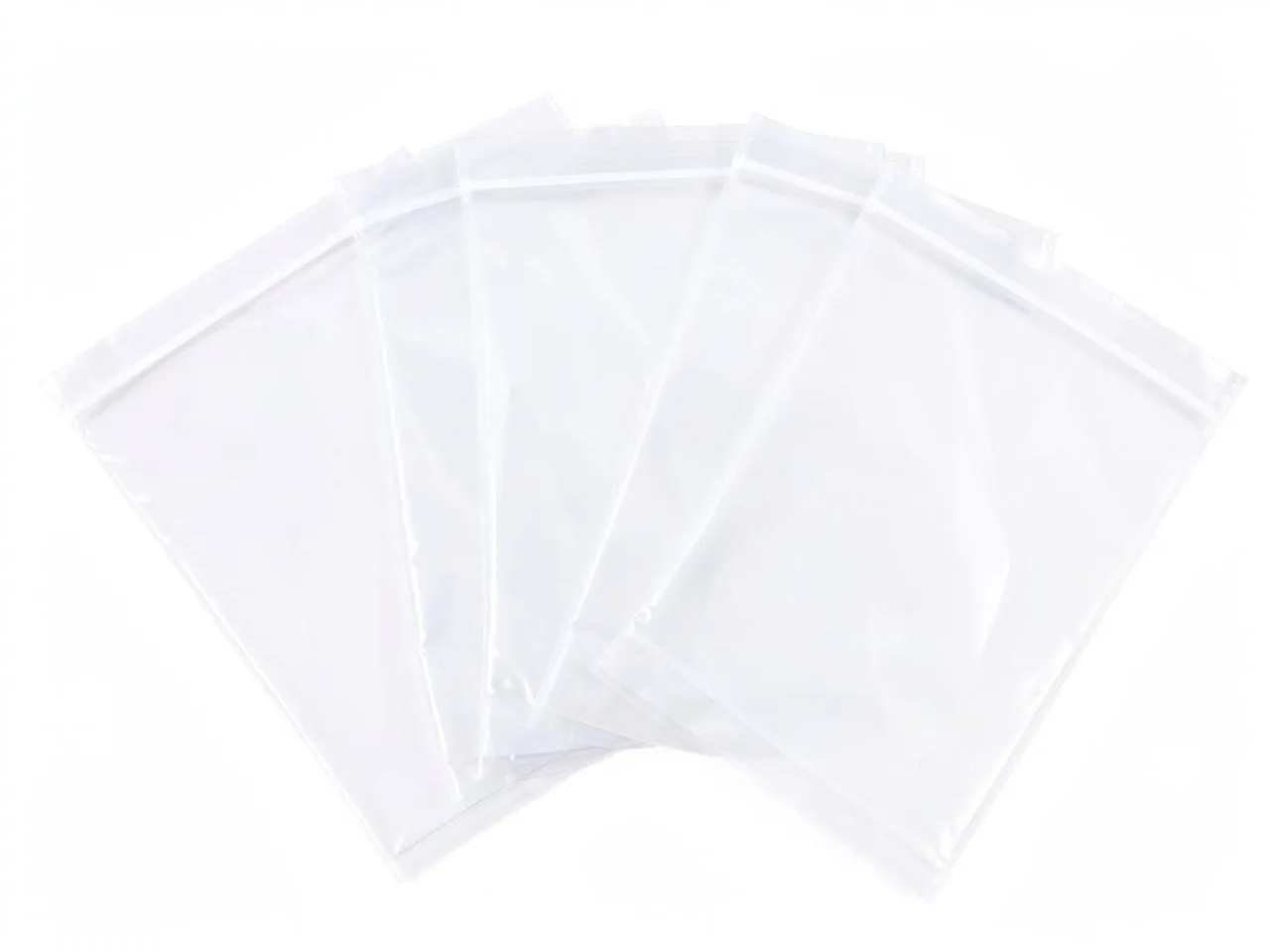
1. Your Poly Bag Usage Has Increased
Stock bags are useful for smaller or changing requirements. But as usage becomes larger and more consistent, custom manufacturing can become practical. When you order custom poly bags, you control the details of the bag instead of working around whatever sizes a distributor happens to stock:
- Width and length
- Film thickness
- Gussets
- Bag construction
- Printing
- Vent holes
- Sealing requirements
- Packaging and case quantities
2. You're Paying for More Plastic Than You Need
Stock dimensions and gauges can force buyers to use packaging that is larger or heavier than necessary. A bag that is an inch too wide, an inch too long, or a mil too thick may not seem like a problem on a small order — but unnecessary width, length, or film thickness becomes much more important at larger production volumes.
Custom sizing lets you match the bag to the product, so you pay for the material you actually need rather than the material that happened to be on the shelf.
3. You're Applying Labels to Every Bag
Labels can make sense for lower-volume products and frequently changing artwork, but they may create material and labor costs at larger volumes. Custom printing places information directly on the bag, including:
- Company logos
- Product information
- Handling instructions
- Barcodes
- Lot or identification areas
- Warning information
- Branding and graphics
The economics of labels versus printing depend on quantity, artwork, number of print colors, bag specifications, and frequency of artwork changes. For stable, higher-volume products, printing directly on the bag is often worth evaluating.
4. Standard Bag Sizes Don't Fit Your Product Properly
Oversized bags waste material, look unprofessional, and can allow products to shift during handling. Undersized bags get stretched, torn, or forced onto products — slowing down packing and increasing failures. Custom manufacturing opens up bag constructions that stock programs rarely offer, such as:
- Flat poly bags
- Bottom-seal bags
- Side-seal bags
- Gusseted bags
- Wicket bags
- Zipper bags
- Die-cut handle bags
- Heavy-duty industrial bags
- Custom printed bags
5. Packaging Is Slowing Down Your Production Line
Packaging cost includes labor and operational efficiency, not only bag price. If employees are spending time opening bags, positioning products, applying labels, handling oversized packaging, or working around packaging that doesn't fit the operation, those minutes add up across every shift.
Wicketed bags are one example of a bag configuration that may be appropriate for certain repetitive or higher-speed packaging applications, because they keep bags organized and easy to open one after another.
6. You Need Your Packaging to Promote Your Brand
Custom printing can place logos, product information, instructions, branding, and other information directly on the package. This is common across a wide range of applications:
- Food products
- Produce
- Bakery products
- Retail products
- Industrial components
- Private-label products
- Distributor programs
7. You're Managing Too Many Stock Bag Sizes
Packaging SKUs can accumulate across departments and products over time — different sizes for different items, ordered from different sources, tracked separately. Reviewing packaging specifications can sometimes create opportunities for consolidation, where one well-designed custom bag covers several products that previously required multiple stock sizes.
Stock Bags vs. Custom Poly Bags: Which Is Right for You?
Stock Poly Bags
Generally appropriate when:
- Order quantities are relatively small
- Packaging requirements change frequently
- Bags are needed quickly
- Standard dimensions work well
- Custom printing isn't necessary
Custom Poly Bags
Worth evaluating when:
- Bag usage is consistent
- Purchasing volume has increased
- Standard dimensions aren't ideal
- More material is being used than necessary
- Labels are being applied manually
- Packaging efficiency is becoming important
- Custom printing or branding is needed
- The company has an ongoing packaging program
"The decision should be based on the total packaging operation, not simply the unit price of a bag."
Start With the Application, Not Just the Bag Size
Width, length, and thickness don't always provide enough information to properly evaluate a custom bag. The way the bag is used matters just as much as its dimensions.
Information That Helps Us Evaluate Your Application
- What product is going inside the bag?
- What are the product dimensions and weight?
- How is the bag filled?
- Is the process manual or automated?
- How is the bag closed?
- Does the package require printing?
- How many bags are used?
- How frequently are they reordered?
- Is the package used for food, produce, retail, or industrial applications?
- Are there special handling or performance requirements?
Understanding the application can help determine whether the requested specification makes sense or whether another bag construction, dimension, or film gauge may be more appropriate.
Talk Directly With a Poly Bag Manufacturer
If your company is purchasing poly bags in volume, it may be worth having a manufacturer review your current packaging.
California Plastix, Inc. manufactures custom polyethylene bags in Pomona, California and works with commercial customers on packaging for food, produce, manufacturing, industrial, distribution, and other applications.
Whether you're currently purchasing stock bags, using custom packaging, or trying to improve an existing specification, we can review your application and determine what manufacturing options may make sense.
When requesting a quote, provide as much information as possible about your current bag and how it is used. If you already have a sample, specification, drawing, or artwork, that can also help evaluate the project.
Need Custom Poly Bags?
Tell us what you're currently using and what you're packaging. California Plastix can review your application and help determine whether a custom poly bag makes sense for your operation.
California Plastix, Inc.1319 E. 3rd Street
Pomona, CA 91766
(909) 629-8288
Continue Learning
Minimum Order Quantities for Custom Poly Bags Explained
Coming soon to the Knowledge Center.
How Custom Packaging Can Lower Total Packaging Costs
Read: How Custom Poly Bags Reduce Packaging Costs
How Packaging Buyers Evaluate Poly Bag Manufacturers
Coming soon to the Knowledge Center.