Industry Guides · 5 min read
Bakery Packaging Bags: What Commercial Bakeries Should Know
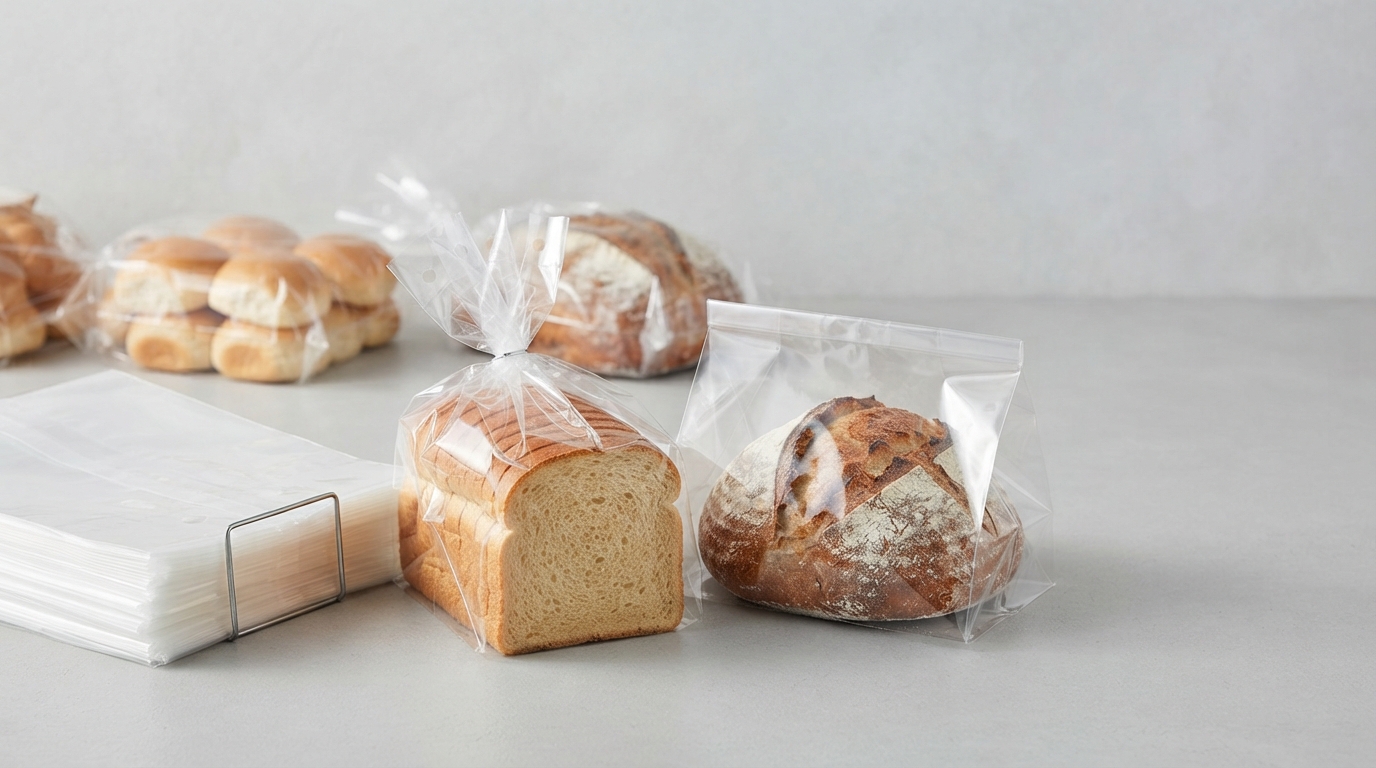
For commercial bakeries, packaging does far more than simply carry a product from the oven to the store shelf. The right poly bag acts as a critical barrier that preserves freshness, maintains texture, ensures food safety, and streamlines high-speed production lines.
Whether you are packaging sliced sandwich loaves, artisan rolls, tortillas, or bulk pastries, choosing the wrong film or bag style can lead to stale products, torn seams, or costly bottlenecks on your packaging line. Here is what commercial bakeries need to consider when sourcing bakery packaging bags.
1. Choosing the Right Bag Style for Your Operation
Commercial bakeries rely on different bag configurations depending on whether products are packed manually or on automated machinery:
- Wicketed Poly Bags: The gold standard for high-volume commercial bread, bun, and tortilla lines. Stacked on a wire wicket with a tear-away lip, these bags allow automated bagging machines (or rapid hand-packing stations) to blow the bag open, insert the loaf, and seal it in seconds.
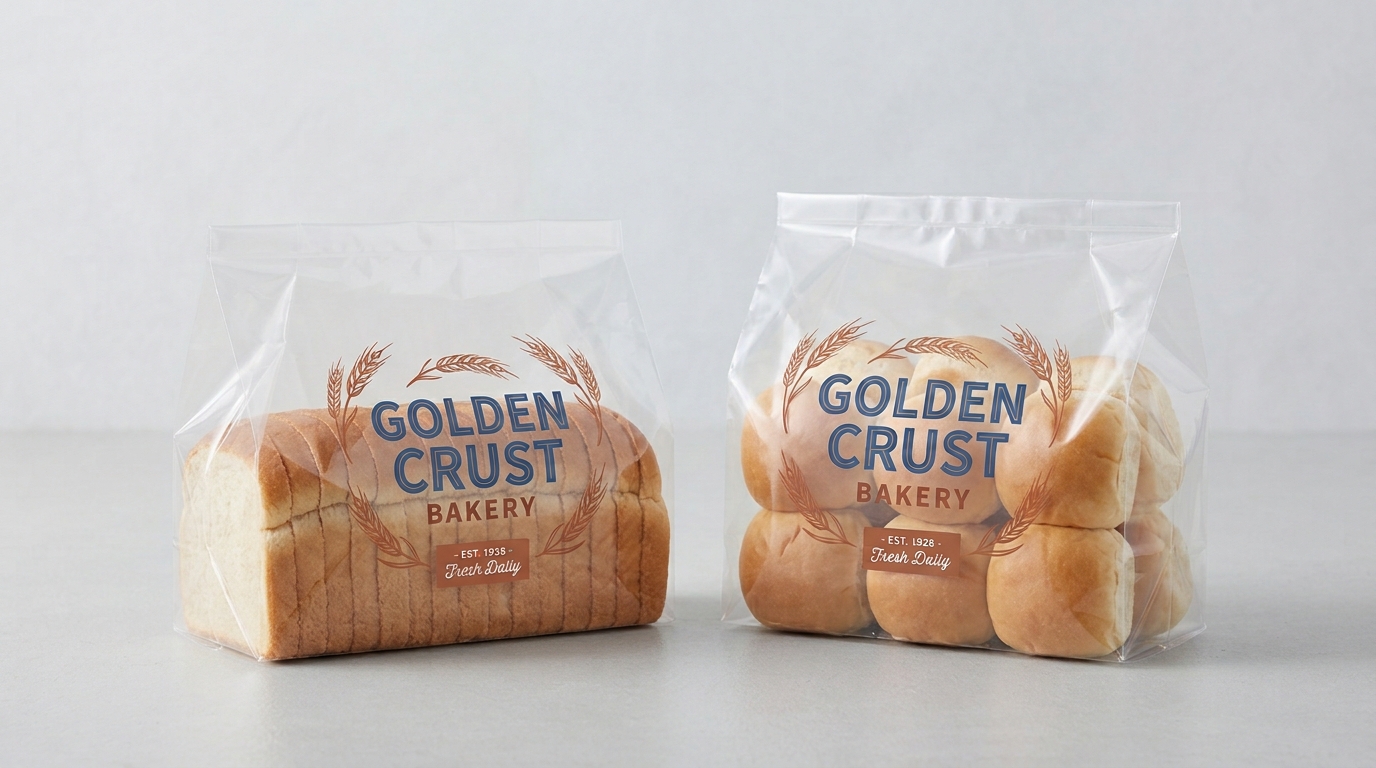
- Bottom-Gusseted Poly Bags: Designed with an expandable fold at the base, bottom-gusseted bags open wide to accommodate bulky loaves, multi-pack dinner rolls, and tall baked goods while allowing packages to stand neatly upright on retail shelves—and providing clean, flat front and back panels ideal for custom flexographic printing.
- Lay-Flat Poly Bags: Simple, versatile, and cost-effective. These are ideal for flat items, cookies, tortillas, or secondary bulk liners placed inside corrugated shipping cartons.
Explore our wicket bags, gusseted bags, and lay flat bags.
2. Matching Film Resin to Product Freshness
Not all plastics perform the same way in a bakery environment. Your film choice determines moisture retention, clarity, and cold-storage durability:
- LDPE (Low-Density Polyethylene): Known for superior clarity, softness, and strong heat-sealability. LDPE provides an excellent moisture barrier to keep bread and rolls soft, and it remains flexible without cracking in freezer applications.
- LLDPE (Linear Low-Density Polyethylene): Offers higher tensile strength and puncture resistance than standard LDPE. If you are packaging crusty loaves with sharp edges or heavy multi-packs, an LLDPE or blended film prevents rips and tears during transit.
- Polypropylene (PP / BOPP): Provides ultra-high, glass-like clarity and crispness, making it popular for retail-facing cookies, biscotti, and gourmet treats where shelf appeal is paramount—though it is less suitable for deep-freeze storage than polyethylene.
Learn more in LDPE vs LLDPE: Differences for Poly Bags.
3. Gauge (Thickness) Selection: Balancing Protection and Cost
Film thickness is measured in mils (1 mil = 0.001 inches). Over-specifying thickness wastes budget, while under-specifying causes split seams and ruined inventory:
- 1.0 to 1.25 Mil: Standard for lightweight, soft sandwich breads, dinner rolls, and tortillas moving through controlled retail distribution.
- 1.5 to 2.0 Mil: Recommended for heavier loaves, crusty artisan breads, par-baked goods, or products going through freezing and thawing cycles.
- 3.0+ Mil: Best reserved for heavy-duty bulk liners used to line dough bins, ingredient totes, or master shipping cases.
4. Food-Contact Compliance and Additives
Any bag touching baked goods must be manufactured using FDA-compliant virgin resins approved for direct food contact. In addition, commercial bakeries should consider functional film additives:
- Slip and Anti-Block Additives: Essential for high-speed packing. They prevent plastic layers from sticking together so bags open effortlessly on air-assisted wicket machines.
- Micro-Perforations: Crusty artisan breads need to breathe so trapped moisture doesn't turn a crispy crust soggy. Pin-perforated poly bags allow controlled airflow while still protecting the loaf from contaminants.
- Vent Holes: Commonly added to bags for warm-packed products or produce-adjacent baked goods to prevent condensation buildup inside the package.
5. Custom Flexographic Printing for Brand Recognition and Compliance
Plain clear bags show off the product, but custom front-and-back flexographic printing turns every loaf into a billboard on crowded grocery aisles. Beyond logos and brand colors, custom printing allows bakeries to print nutrition facts, ingredient lists, allergen warnings, and UPC barcodes directly onto the front or back panel of the bag—eliminating the labor and material cost of applying adhesive labels.
6. Why Buying Factory-Direct Matters
Supply chain delays and inconsistent film quality can bring a commercial bakery line to a standstill. Partnering directly with a domestic poly bag manufacturer gives bakeries clear advantages over buying off-the-shelf stock from third-party distributors:
- Exact Custom Dimensions: Bags tailored to your exact loaf dimensions eliminate baggy, excess film and improve shelf presentation.
- Consistent Film Specs: Direct extrusion and converting ensure uniform gauge, reliable slip levels, and clean seals batch after batch.
- Shorter Lead Times & Lower Costs: Eliminating middleman markups reduces per-unit packaging costs while keeping inventory replenishment predictable.
View our full range of bakery bags.
Ready to Upgrade Your Bakery Packaging?
At California Plastix, we extrude, print, and convert custom FDA-compliant LDPE and LLDPE poly bags—including wicketed bread bags, bottom-gusseted bags, and bulk liners—manufactured factory-direct in Southern California. Need a custom quote or film sample? Contact our team today with your bag dimensions, mil thickness, and order volume for fast factory-direct pricing.
California Plastix, Inc.1319 E. 3rd Street
Pomona, CA 91766
(909) 629-8288